What the house asks of a crew
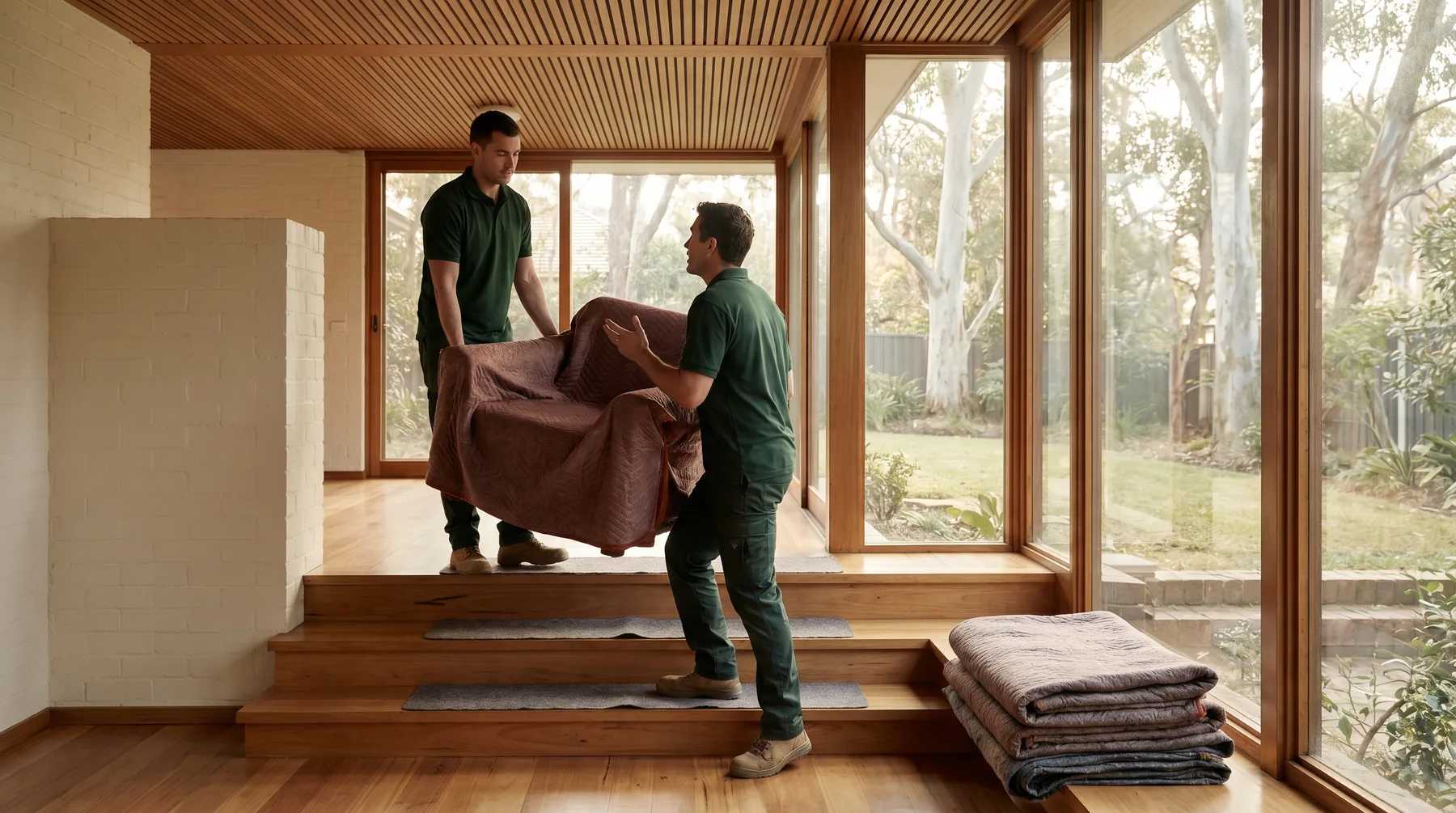
A split-level never gives you one long carry. It gives you eight short ones with a level change in the middle of each, and the level changes are where furniture and houses get hurt. So the plan is built around them: which pieces can turn on the half-landing and which have to come down backwards, where the crew stages between flights so nobody carries further than one run of steps, and which openings the long pieces actually leave through. On plenty of these houses the answer to that last question is the garden side, straight through the sliding panel, not the front door at all.
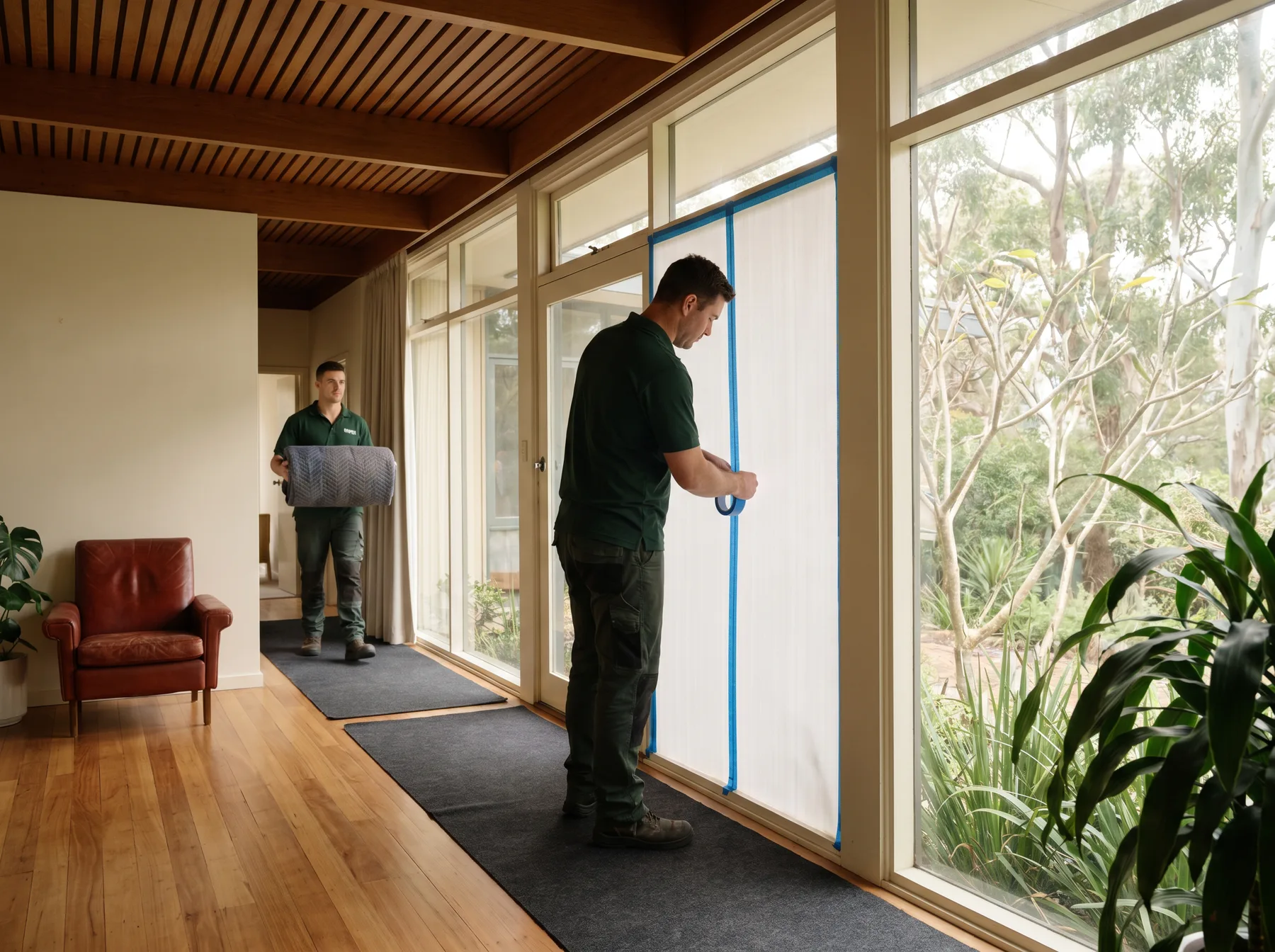
Glass and timber change the protection run too. Floor-to-ceiling glass on the carry route gets boarded before a single carton moves, polished boards get felt runners on every tread and landing, and the exposed timber balustrades that make the stair worth photographing get wrapped like furniture, because to us they are.
How we run the day
- The walkthrough comes first. We count the half-flights, measure the tight turns, and agree the exit for every oversized piece before moving day, so the quote reflects the actual house.
- Protection is a scheduled step. Boards on the glass, felt on the treads, guards on the newel posts and door frames. It happens before the carry and comes off last.
- Top level first. Cartons stage at each landing so every flight is walked once with weight, not twenty times.
- The long pieces move one at a time. Two on the load, one calling the treads. Nothing shares a stair with anything else.
- The living level goes last so you have somewhere to stand, sit and make tea until the house is nearly empty.
The crew this usually is
Most split-level houses here run with the 3 movers + 1 truck crew at $250/hr online (standard $350/hr); larger four-plus-bedroom places step up to 4 + 2 at $400/hr. The walkthrough settles it honestly, and the rates page shows every number we ever charge.