Guides · the flagship
How a split-level changes a move
A single-level house gives a crew one long carry. A split-level gives them eight short ones with a level change in the middle of each, and every good decision on moving day traces back to that difference.
The geometry, in one drawing
St Ives grew its housing stock in the decades when Sydney architects were folding houses down the slope instead of flattening the block: living areas half a level below entry, bedrooms half a level above, a rumpus below that, glass along the garden side to let the bush in. Beautiful to live in. Interesting to carry a wardrobe through.
Rule one: the half-flights set the order
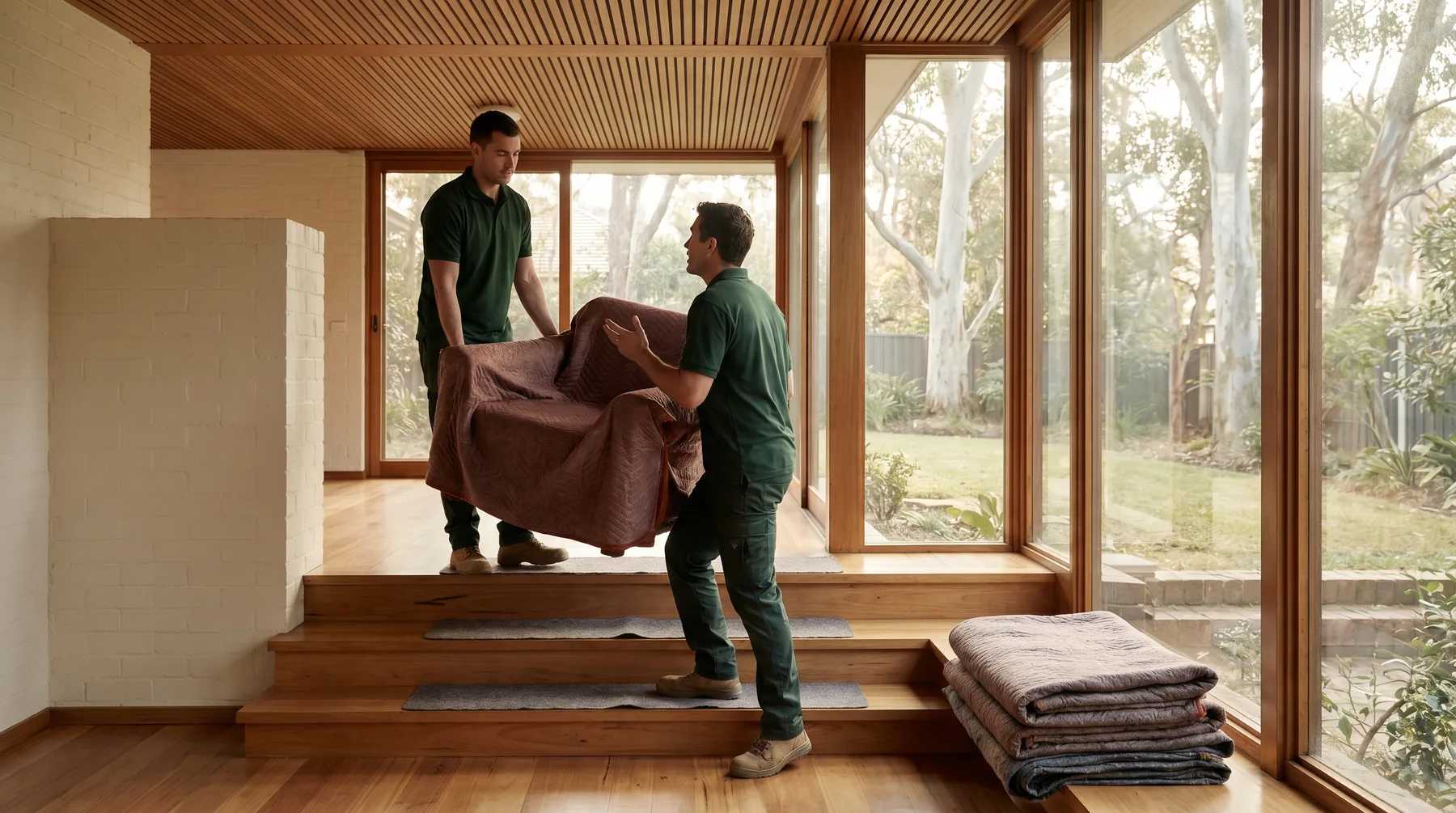
On flat ground a crew can empty rooms in almost any order and the day still works. On a split, a wrong order means furniture queuing on a landing while someone reverses a lounge back up six stairs. So the sequence is fixed before the day: top level first, then the middle, living level last. Cartons come down early and build the truck's base; the long and heavy pieces come down when the stairs are clear and the crew is fresh enough to respect them.
The landing is the unsung hero. Each half-landing becomes a depot: pieces stage there so that no one ever carries weight further than one run of steps, grips change, and the next flight starts controlled. Watch a good crew on a split and half of what you see is deliberate waiting.
Rule two: the front door is not always the door
Mid-century plans put their widest openings on the garden side: sliding glass panels of two metres and more, against a front door of 820mm behind a tight entry turn. For sofas, sideboards and anything that will not love a half-landing rotation, the honest route is often out through the glass line, across the terrace, around the house. Longer in metres, shorter in risk. A plan that has measured both routes beats an opinion formed on the driveway.
Rule three: the house is on the route
Everything on the carry route is part of the move: the glass you walk beside, the treads you walk on, the balustrade your hip passes at each turn. That is why protection is a scheduled first step and not a courtesy: board on the glass, felt on the treads and landings, guards on newels and frames. The details live in their own guide: glass walls and timber floors, protection before carrying.
What to ask any removalist about a split-level
Ours is not the only careful crew on the ridge. Whoever you talk to, these five questions sort the planners from the hopers:
- How many half-flights did you count, and where will the crew stage between them?
- Which opening does the sofa leave through, and have you measured it?
- What goes over the glass, and what goes under the crew's boots on the treads?
- What order do the levels empty, and why that order?
- Can I have all of that in writing before I book?
If the answers arrive quickly and specifically, book whoever gave them. If the answer is a squint and "she'll be right", the house deserves a second phone call. Consumer basics for hiring any mover, deposits, quotes and cancellations, are laid out by NSW Fair Trading; industry accreditation is run by AFRA, the Australian Furniture Removers Association, whose member list is public.
The short version: a split-level move is a sequencing problem wearing a furniture costume. Solve the sequence on paper first and the day is calm. Section your house in the planner to see your own sequence sketched, or send the enquiry and we will bring the tape measure.